Passive Houses are healthy, quiet, secure , resilient and also uses less energy.
TLDR:
In short: while most houses are built to "code" (the bare minimum allowed by law), a Passive House is engineered for extreme comfort, incredible air quality, and energy bills so low they look like a typo. Think of it as moving from a leaky tent to a high-end thermos.
We can help you optimize your house’s construction detail, layout, and analyze a building’s energy balance, and make sure it is durable, comfortable and sustainable.
for more information about what a Phius certified consultant does, please visit the Phius website (www.phius.org/certifications/professionals/phius-certified-consultant-cphc)
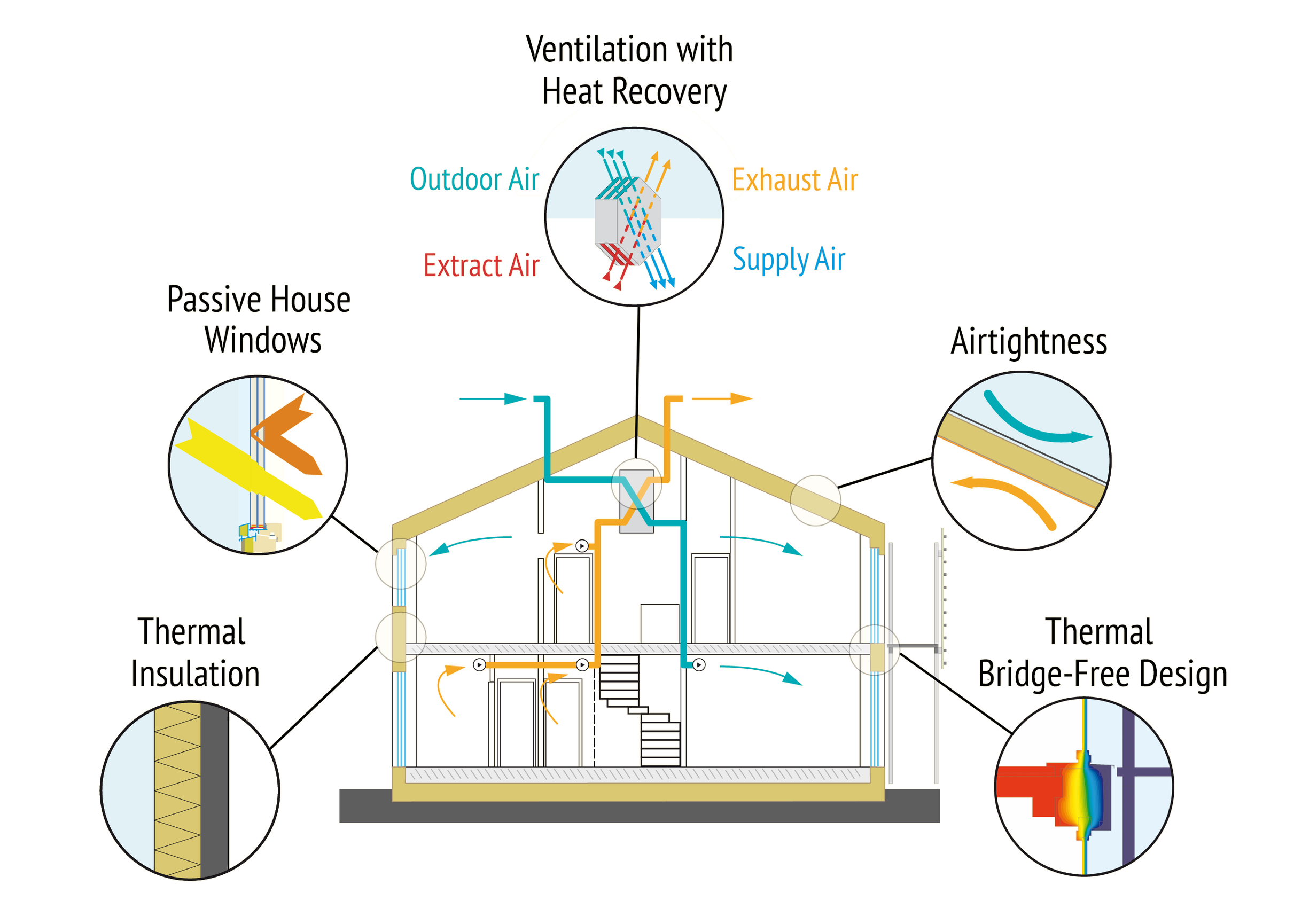
The 5 Pillars of Passive House Design
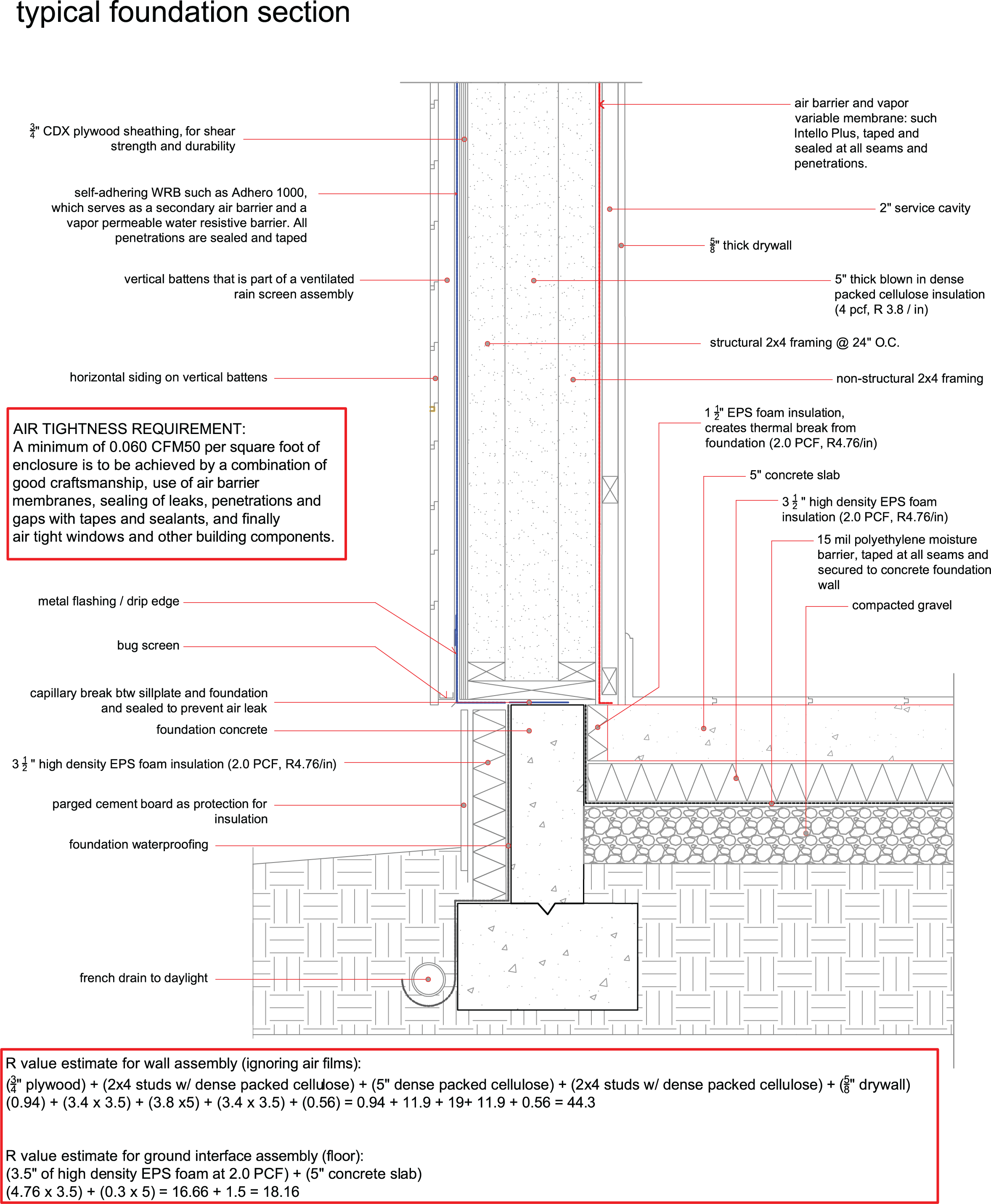
Super-Insulation: A very thick, continuous layer of insulation around the entire "envelope." A passive house keeps heat in during winter and out during summer, like a premium winter coat.
Airtightness: Sealing every tiny crack and gap in the building's shell. That means you let in outside air on your terms and prevent drafts and moisture damage; airtightness ensures you control the air, not the wind.
High-Performance Windows: Typically triple-paned with insulated frames. You can sit right next to a window in a blizzard and never feel a chill.
Thermal Bridge-Free: Ensuring there are no "highways" (like steel or wood studs) that bypass insulation. Without these thermal bridges, you eliminates cold spots where mold likes to grow.
Heat Recovery Ventilation (HRV): A system that brings in fresh air while "reclaiming" the heat from the air it exhausts. This means you get 24/7 fresh, filtered air without losing your indoor temperature.
Energy & Comfort Comparasion
To give you a clear picture, let's look at how a 2,500 sq. ft. home in the Pacific Northwest typically performs when built to the standard Washington State Energy Code versus the passive house standard.
Feature
Heating Demand
Cooling Demand
Air Quality
Surface Temperature
Annual Energy Consumption
Standard Home
~$120 - $180 / mo
~$40 - $70 / mo
depends
cold spots near windows and corners
~$1800 - $2400
Passive House
~$15 - $30 / mo
~$10 - $20 / mo
HEPA filtered fresh air
uniform temperature everywhere
~$400 - $600
Passive House Advantage
lower energy bills
lower energy bills
no outside dust & pollutants
no drafty feeling, even in extreme cold weather
lower fixed cost